Cow & Calf Care
Dairy farmers work around the clock every day to care for their cows and calves.
Their commitment to producing high-quality milk begins with taking good care of the cows and treating them with respect. Dairy farmers provide their cows with a nutritious diet, good medical care and healthy living conditions.
Animal Wellbeing
Animal care is a top priority for dairy farmers. Dairy farmers work closely with a team of specialists to help keep their cows healthy and comfortable.
Who is on a Dairy Farmer’s Team?
- Veterinarian - Dairy farmers work with veterinarians to provide their cows routine checkups, vaccinations and speedy treatment of illness.
- Nutritionist - Professional animal nutritionists help dairy farmers develop a balanced and nutritious diet for their cows. They periodically visit the farm to assess the animals and make dietary adjustments for growth, development, milk production and health changes such as pregnancy.
- Hoof care specialist – Regular hoof care is essential for maintaining cow comfort and mobility. Hoof care specialists assess cows’ hooves and cater to their individual needs, ranging from preventive maintenance to corrective measures.
Cow Care Resources
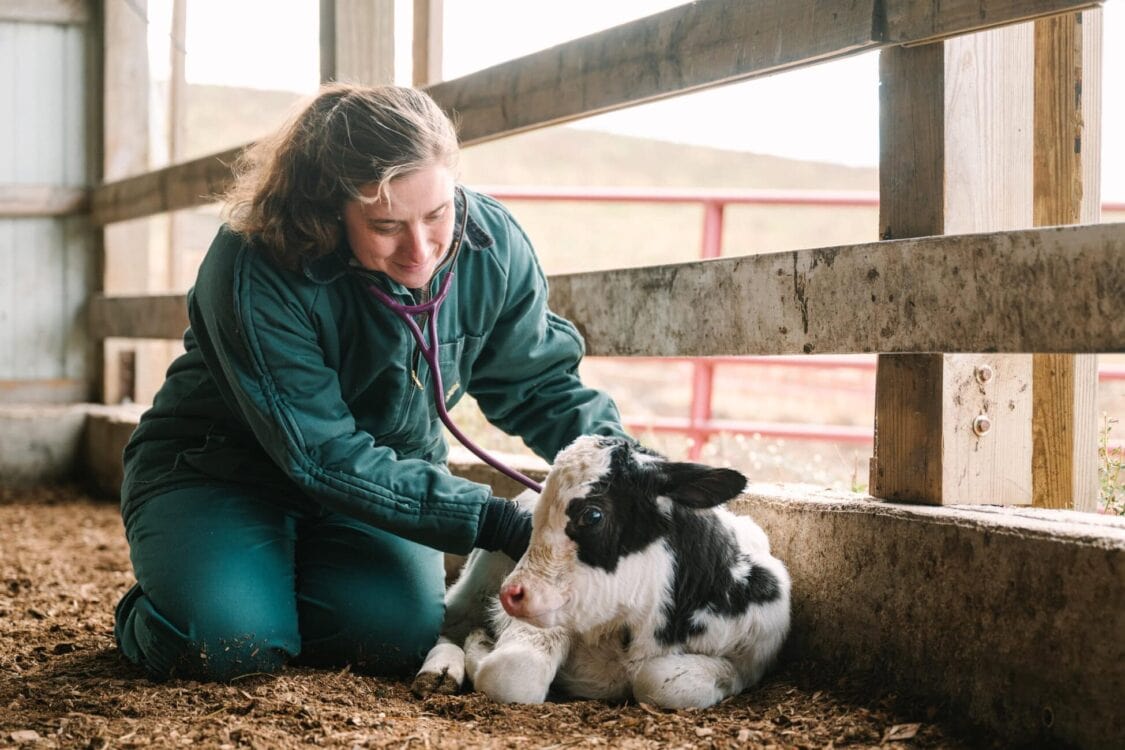
Meet Dr Allie Cain: Large Animal Veterinarian
Large animal veterinarian Allie Cain gives a behind-the-scenes look.

Activity Trackers for Cows
Activity trackers are changing the way farmers care for their cows.

What Do Cows Lay On?
Dairy farmers provide cows with clean and comfortable bedding.
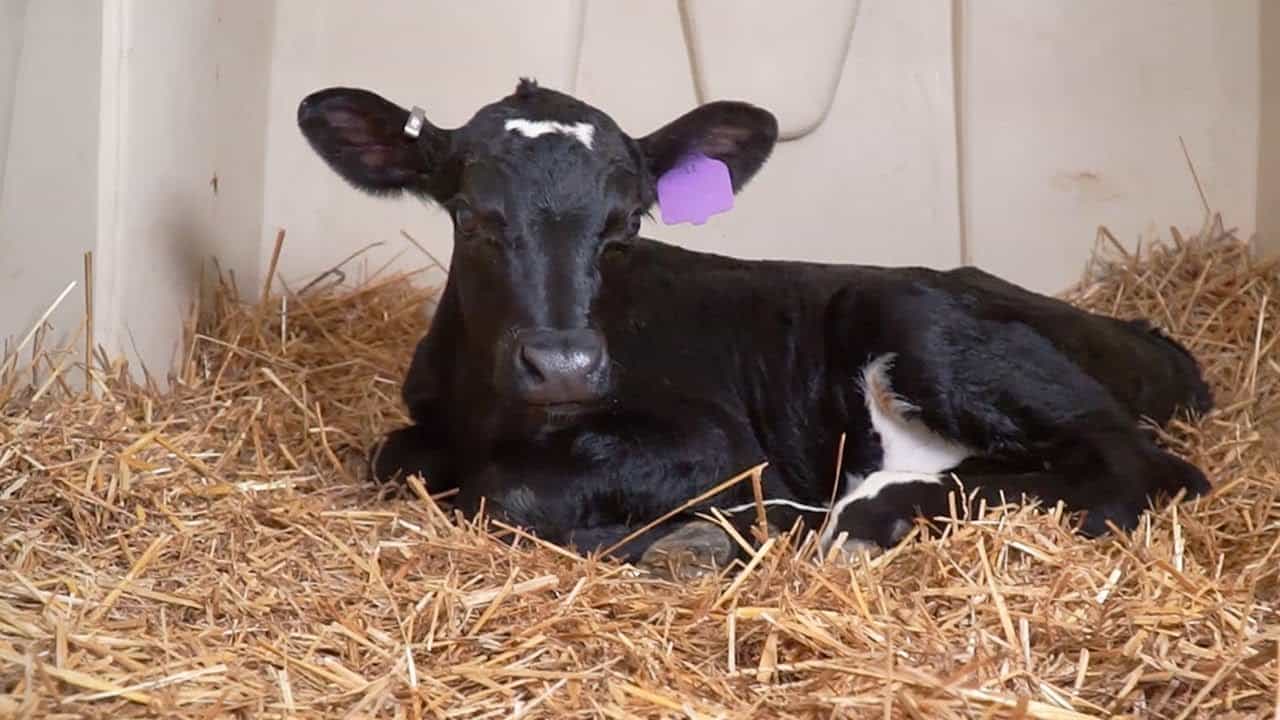
Calf Care with Dr. Fred Gingrich
Veterinarian Dr. Fred Gingrich explains how dairy farmers care for their calves.
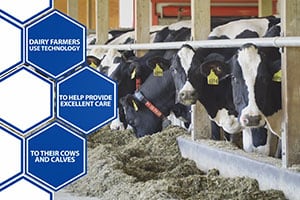
Modern Technology: Focusing on Cow Comfort
Dairy farmers use technology to provide excellent care for their cows.
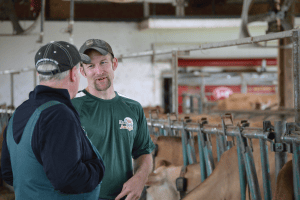
The Dairy Farmer’s Team
Dairy farmers have a team of specialists to help them provide the best quality care.
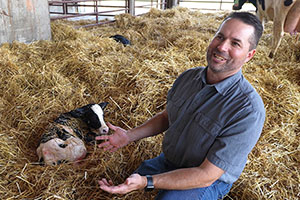
Modern Dairy Farming: Caring for Cows
Frank Burkett is focused on providing optimal comfort for his cows.
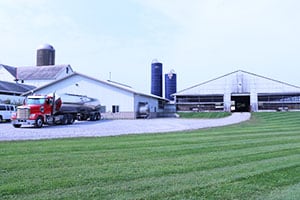
Virtual Dairy Farm Tour
Take a virtual tour of Cold Run Jerseys, a dairy farm in Salem, Ohio.
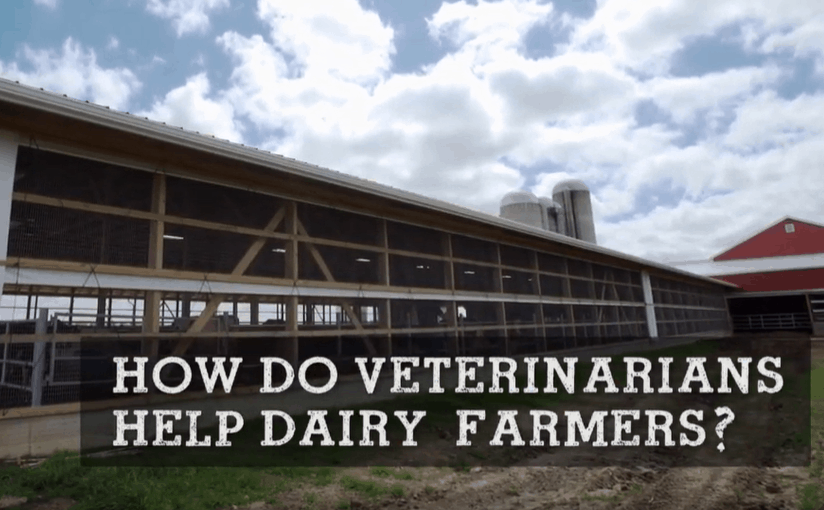
How Do Veterinarians Help Dairy Farmers?
Veterinarian Dr. Fred Gingrich explains what vets do on dairy farms.
Fact Sheet: Animal Care
Information about animal care on dairy farms.
Fact Sheet: Antibiotics
Information about antibiotic usage on dairy farms.
Fact Sheet: Hormones
Information about the absence of added hormones in milk.
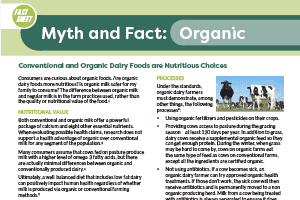
Fact Sheet: Organic Milk
Information about organic milk and farming practices.
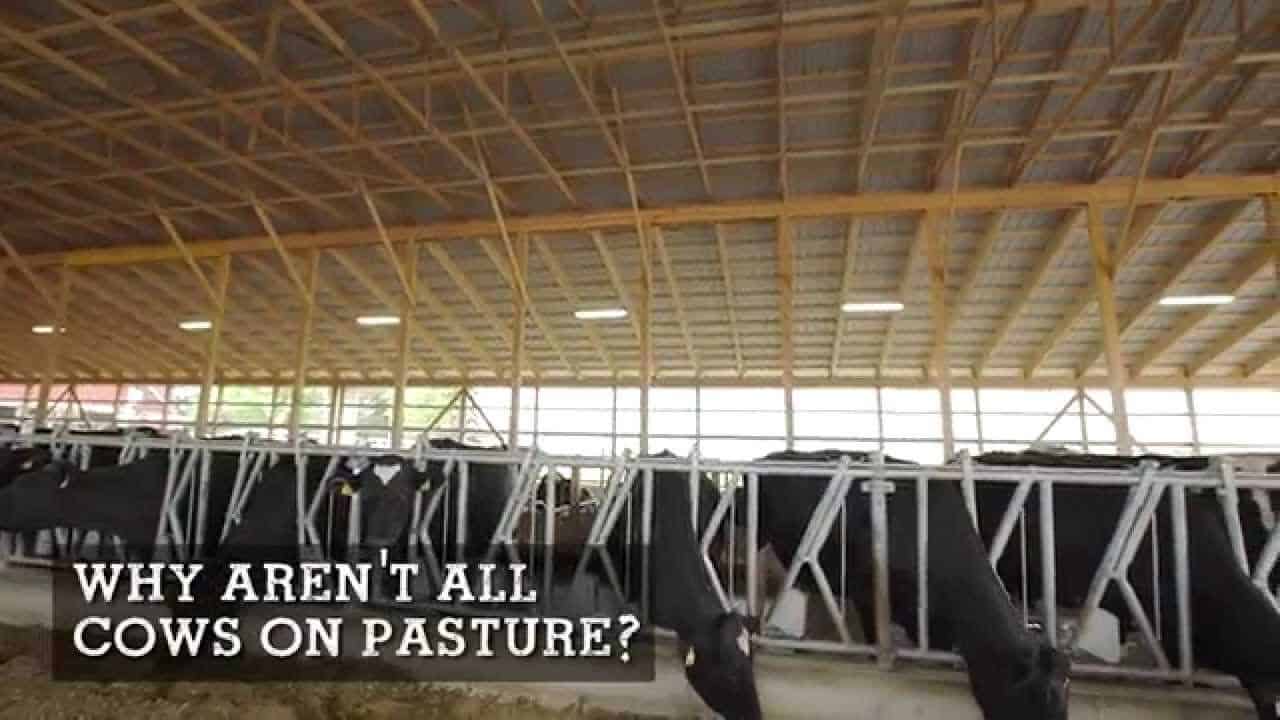
Why Aren’t All Cows on Pasture?
Veterinarian Dr. Fred Gingrich explains why not all dairy cows are on pasture.
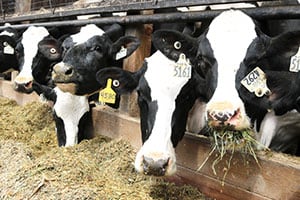
What Do Cows Eat?
We aren’t the only ones eating a carefully balanced diet — dairy cows do too!
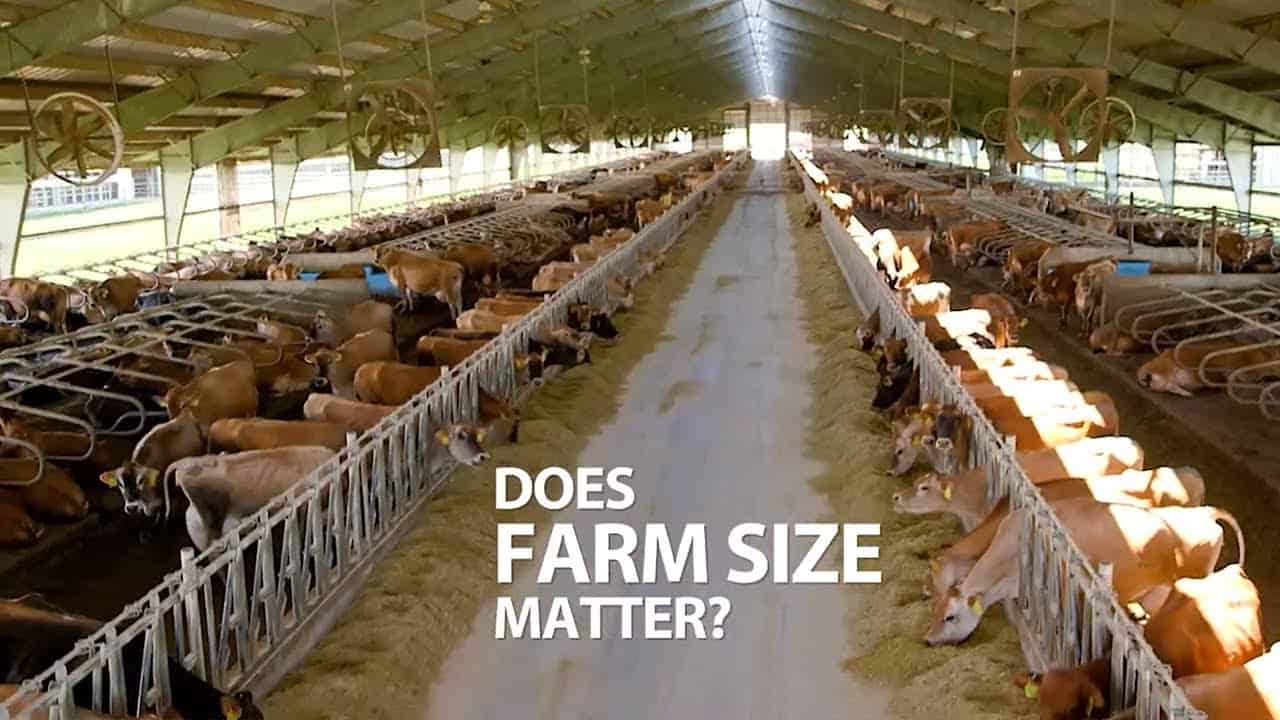
Does Farm Size Matter?
Dairy farmers explain that when it comes to producing high-quality milk, size just doesn’t matter.
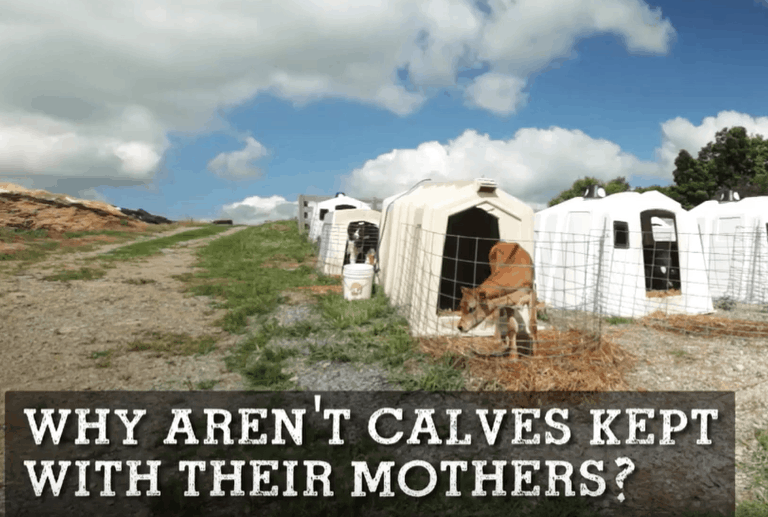
Why Aren’t Calves Kept with their Mothers?
Veterinarian Dr. Fred Gingrich discusses calf care on a dairy farm.
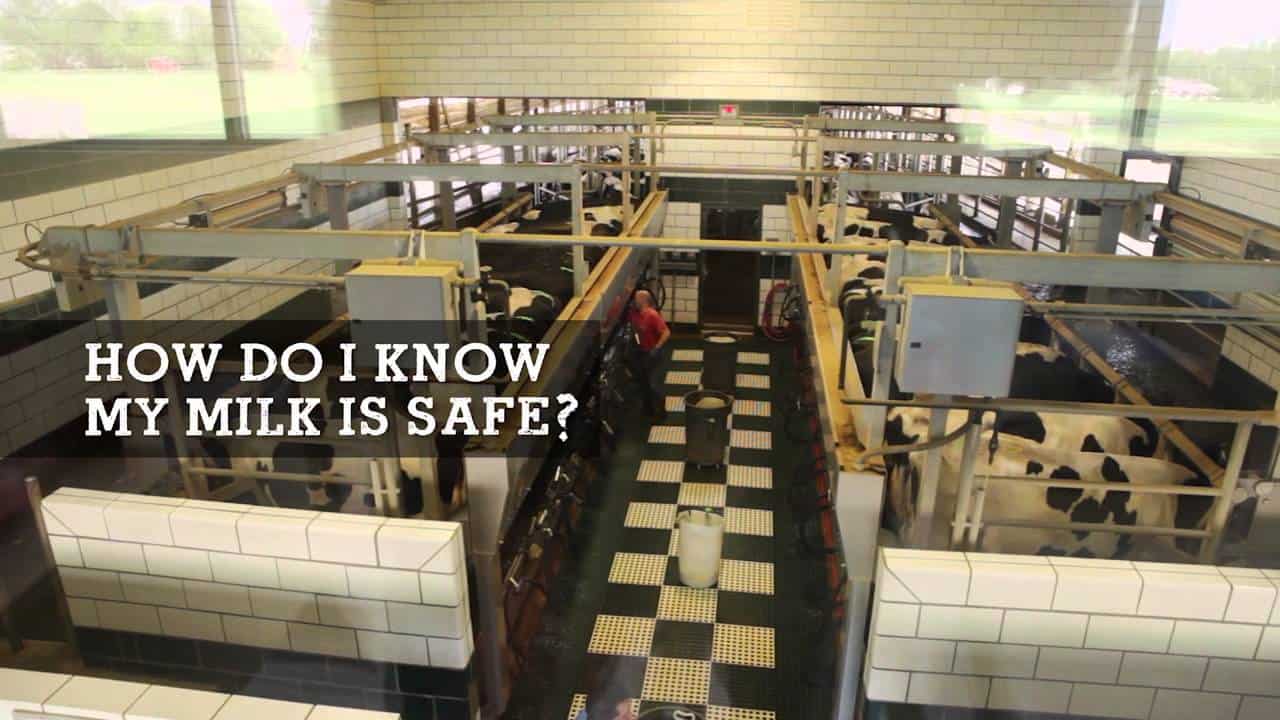
Why Do You Give Cows Antibiotics?
Veterinarian Dr. Fred Gingrich discusses antibiotic use and milk safety.
How Do Cows Stay Warm in the Winter?
Dairy farmers work hard to keep their cows healthy and comfortable, especially during winter.

Cow Care with Dr. Fred Gingrich
Veterinarian Dr. Fred Gingrich explains what cows eat, how they are cared for and if farm size matters.
What Happens When a Calf is Born?
What do they look like? How big are they? Where do they live?
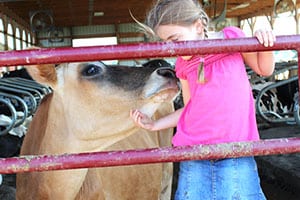
A Day in the Life of a Dairy Cow
Take a walk with us through a day in the life of a dairy cow.

Hoof Trimming: Another Aspect of Cow Care
Learn about hoof trimming and how regular hoof care is essential to cow health.
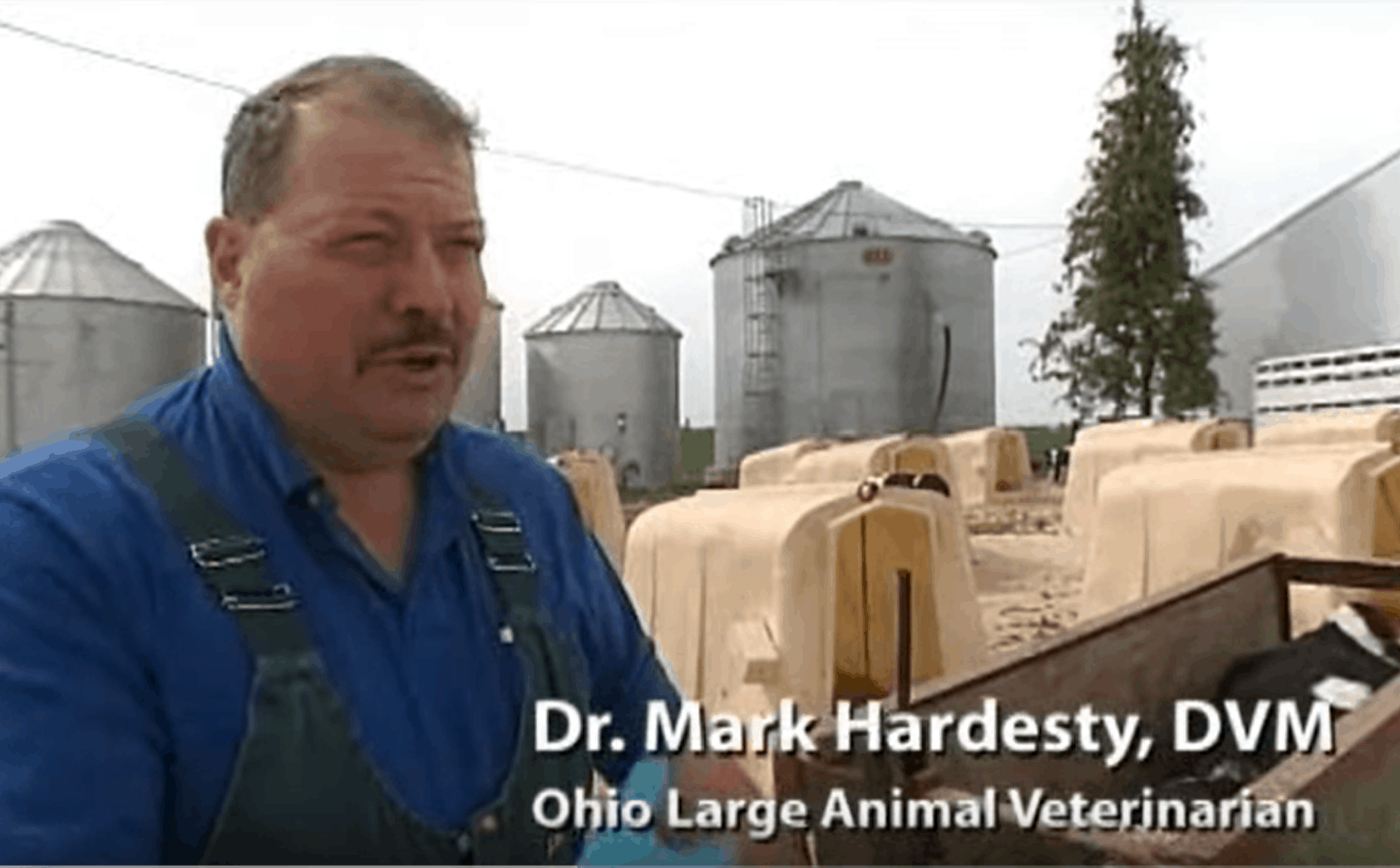
Dehorning: A Humane Practice Focused on Cow Safety
Dr. Mark Hardesty explains why and how cows are dehorned.
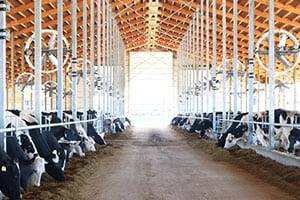
How Cows Beat the Heat
Some like it hot, but cows do not!
Safe Housing for Calves & Cows
For the first 2-3 months of their lives, most calves live in individual pens. These pens have ample space for the calf to move about and protect them from bad weather. Individual housing allows farmers to closely monitor each calf’s health and ensure they are receiving good nutrition.
When calves are around 3 months old, they are moved into a group pen with other calves of similar age and stay with these pen-mates until they are about 2 years old and have their first calves.
Many of Ohio and West Virginia’s dairy cows live in freestall barns, a type of climate-controlled barn where cows are free to move about as they choose. Barns are commonly equipped with fans and misters to keep the cows cool in the summer and have curtains that can be lowered to block the wind and keep cows warm in the winter.
Cow & Calf Nutrition
All cows and calves have continuous access to clean water and food. Dairy farmers work with animal nutritionists to develop balanced and nutritious diets, making dietary adjustments for growth, development, milk production and health changes such as pregnancy.
Dairy Cow Nutrition
Dairy cows eat about 100 pounds of feed and drink 30-50 gallons of water (about a bathtub full) each day. The ingredients in the cow’s feed vary by season and geography. They are typically a combination of:
- Hay and grains such as corn, wheat and barley
- Proteins like soybean and canola
- Vitamins and minerals
- By-products from food and fiber industries like citrus pulp and cottonseed can also be included in cows' carefully balanced diets and converted to milk rather than being sent to landfills, thanks to cows’ unique, 4-chambered stomachs.
Dairy Calf & Heifer Nutrition
Dairy calves are fed colostrum (a mother’s first milk) within their first 24 hours of birth to ensure they get all the antibodies, nutrients and minerals needed for a healthy start. For the next 2-3 months, they will drink milk or a specially formulated milk replacer. Then they are weaned off milk and fed a diet of grain, hay and water. Calves are picky just like most children, so most calf grain is coated in molasses to make it sweeter and taste better.
Cow Nutrition Resources
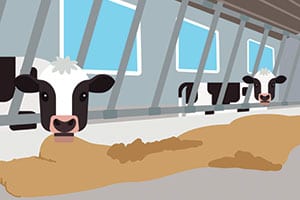
What Do Cows Eat?
Dairy farmers and nutritionists work together to provide cows with a well-balanced diet.
The Dairy Farmer’s Team
Dairy farmers have a team of specialists to help them provide the best quality care.
What Do Cows Eat?
We aren’t the only ones eating a carefully balanced diet — dairy cows do too!
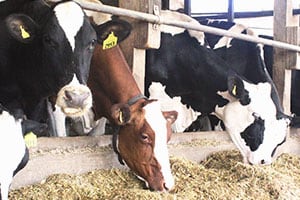
What is a TMR?
Total Mixed Ration. Cows spend about 5 hours a day eating, and they consume about 100 pounds of feed!
Use of Technology in Dairy Farming
Dairy farmers are utilizing modern technology to help care for their cows and calves.
What technology is used on a dairy farm?
- Robotic feed pushers help keep feed within reach of dairy cows at all time
- Robotic milking systems allow cows to be milked when they choose
- Milking systems with automatic take-offs have a milk flow sensor that gently removes the milking unit when each cow is finished
- Automatic calf feeders provide access to fresh milk all day long
- Activity trackers found in special neck collars, ear tags and leg bands digitally track daily activity of each cow to help farmers evaluate cow comfort and health
Dairy Farming Technology Resources
Activity Trackers for Cows
Activity trackers are changing the way farmers care for their cows.
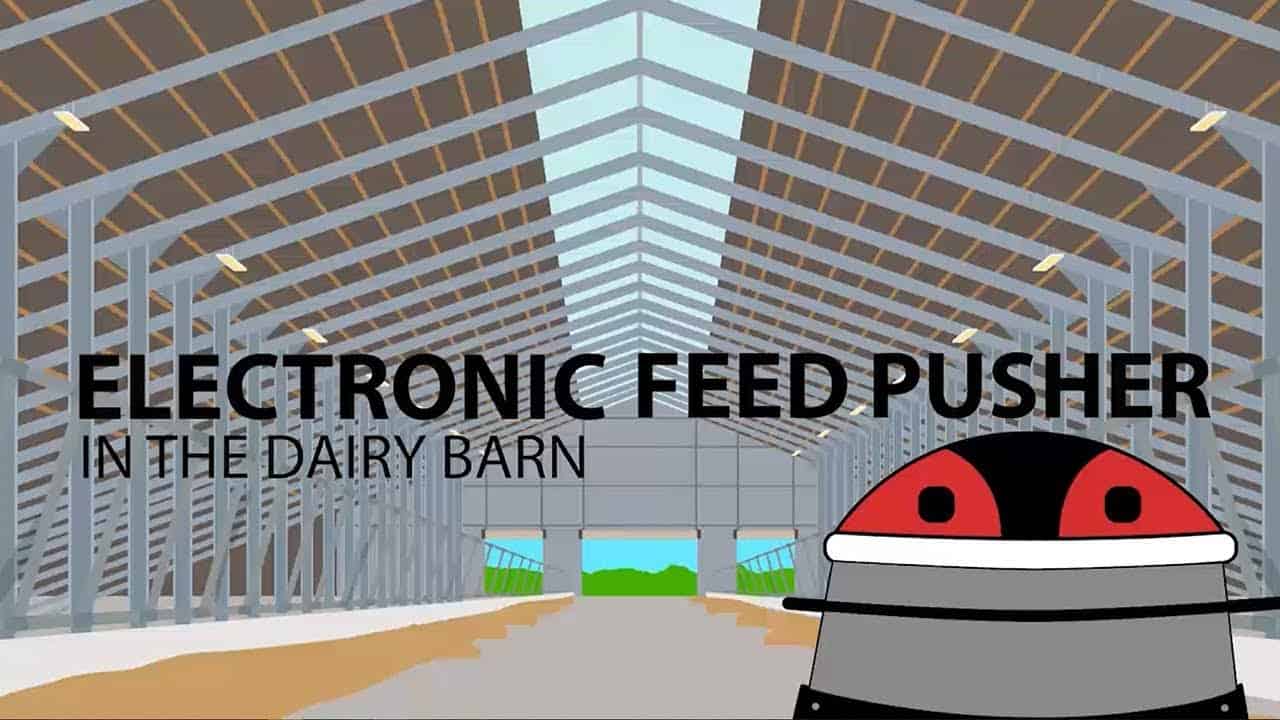
Electronic Feed Pusher in the Dairy Barn
An electronic feed pusher is like a Roomba used to help feed the cows in the dairy barn.
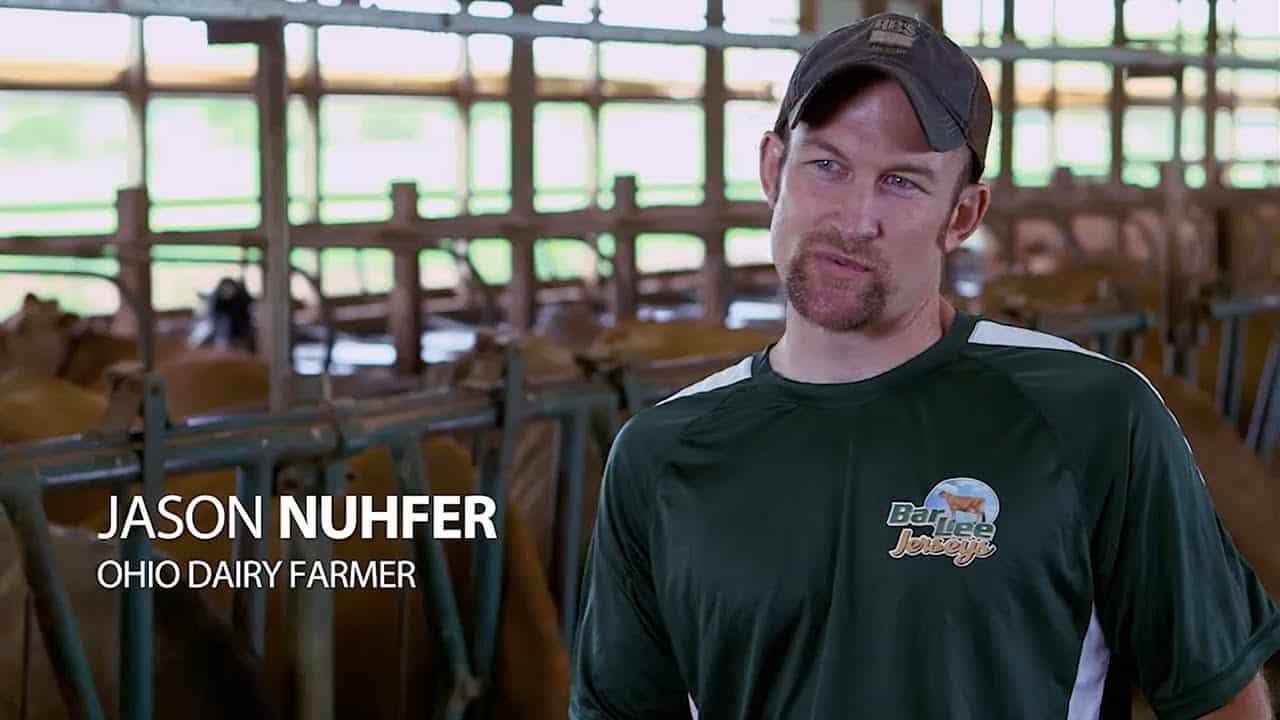
How Robotic Milking Works
Ohio dairy farmer Jason Nuhfer explains how robotic milkers work and why he uses them.
A Day in the Life of a Dairy Cow
Take a walk with us through a day in the life of a dairy cow.