
Lactose Intolerance
Many people with lactose intolerance can continue to enjoy dairy foods by choosing easier to digest options such as lactose-free milk, Greek yogurt, kefir and naturally aged cheeses. Lactose-free dairy options provide the same essential nutrients as regular dairy foods without lactose. These options allow many individuals with lactose intolerance to continue enjoying dairy foods as part of a balanced diet.
Lactose intolerance is a common digestive condition—not a milk allergy—that affects how the body digests lactose, the natural carbohydrate found in milk and dairy foods. While some individuals may experience gastrointestinal discomfort, lactose intolerance does not mean dairy must be avoided.
What is Lactose Intolerance?
Lactose intolerance occurs when the body has difficulty digesting lactose, the natural sugar found in milk and dairy foods.
During digestion, an enzyme called lactase helps break down lactose so it can be used for energy. Each person produces different levels of lactase, and when the body produces less of this enzyme, lactose may not be fully digested.
As a result, some individuals may experience gastrointestinal issues. Common symptoms include stomach discomfort, gas and bloating. However, these symptoms can also be caused by other digestive conditions, so it is important to consult a healthcare professional for proper testing and diagnosis.
Lactose Intolerance vs. Milk Protein Allergy
-
Lactose intolerance occurs when the body has difficulty digesting lactose, the natural carbohydrate in milk
-
A milk protein allergy is an activation of the body's immune response to the protein in milk
Milk protein allergies typically begin in infancy, and individuals with a milk protein allergy must avoid all dairy foods. In contrast, people with lactose intolerance can often include dairy foods by choosing options that fit their individual tolerance level.
Lactose Intolerance Across the Lifespan
Lactose intolerance is less common in young children and more likely to develop in adolescence or adulthood.
As people age, the body will produce less lactase. However, tolerance levels vary, and many individuals can continue to enjoy dairy without significant discomfort.
If lactose intolerance is suspected in children, it is important to consult a pediatrician or healthcare provider before limiting dairy foods, as these foods provide essential nutrients for growth and development.
Can People With Lactose Intolerance Eat Dairy?
Yes. Most people with lactose intolerance do not need to eliminate all dairy foods completely.
Lactose intolerance is a highly individualized condition, and many people can tolerate small amounts of lactose, especially when consumed with meals. Others may find that certain dairy foods are easier to digest because they naturally contain less lactose or contain live active cultures that help with lactose digestion.
Keeping dairy foods in the diet can help provide important nutrients such as calcium, vitamin D, phosphorus and high-quality protein. Finding dairy options that work for individual tolerance levels can help people continue to enjoy both the taste and nutrition benefits of dairy foods.
Best Dairy Foods for Lactose Intolerance
Different dairy foods contain different amounts of lactose, making some easier to enjoy than others.
Lactose-free Milk
Lactose-free milk is real cow's milk with the lactose either broken down by lactase and/or removed through filtration. It provides the same nutrients as regular milk, including protein, calcium and vitamin D.
Yogurt
Yogurt with live and active cultures can help digest lactose, as beneficial bacteria help break down the natural carbohydrate. Many people with lactose intolerance find yogurt easier to tolerate than milk.
Greek Yogurt
Greek yogurt naturally contains less lactose than traditional yogurt and can be an easy way to enjoy dairy while adding protein to meals and snacks.
Kefir
Kefir is a fermented dairy beverage containing beneficial bacterial cultures that support digestion.
Naturally Aged Cheese
Naturally aged cheeses such as Cheddar, Colby, Mozzarella and Swiss are low in lactose due to the steps of cheese making and natural aging.
Diagnosing Lactose Intolerance
Symptoms such as gas, bloating and stomach discomfort can have many causes. If you think you or your child may be lactose intolerant, talk with your doctor, pediatrician or registered dietitian before removing dairy foods from your diet.
Lactose intolerance is less common in young children, and proper diagnosis can help ensure that important nutrients from dairy foods are not unnecessarily eliminated.
Tips for Enjoying Dairy With Lactose Intolerance
Many people successfully include dairy foods in their diet by making small adjustments.
- Choose lactose-free milk and dairy foods
- Enjoy yogurt with live and active cultures
- Select naturally aged cheeses that are low in lactose
- Consume dairy foods with meals
- Start with small amounts of lactose-containing foods and gradually increase as tolerated
- Experiment with different dairy foods to find what works best for you
Lactose Intolerance Resources

Science Summary: Lactose Intolerance
Low lactose and lactose free dairy provides nutritional benefits for those with lactose intolerance.
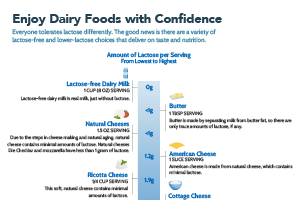
Enjoy Dairy Foods With Confidence
There are a variety of lactose-free and lower-lactose choices that deliver on taste and nutrition.
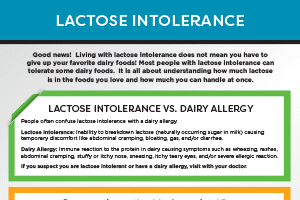
About Lactose Intolerance
Information about lactose intolerance and tips for consuming dairy foods.

What is Lactose Intolerance?
Information about signs, symptoms and ways to enjoy real dairy foods.
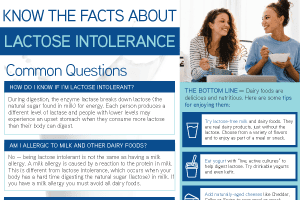
Facts About Lactose Intolerance
Answers to common questions about lactose intolerance and tips to manage.