Milk From Farm to Fridge
Milk is one of the most tested and regulated foods in the United States. From the farm to your fridge, milk goes through strict quality controls to ensure freshness, purity and great taste.
How is Milk Processed?
From the Farm
Within 72 hours of the milking process, milk is transported to a dairy processing plant in an insulated tanker.
Safety Testing
Milk is tested for antibiotic and other drug residues before it leaves the farm and again before it leaves the truck to enter the plant. Milk that does not meet safety and quality standards is immediately discarded and never enters the food supply.
In 2025, less than .006% of milk tested positive for antibiotic residues.
Pasteurization
When milk arrives at the dairy processing plant, it is heated to kill any disease-causing bacteria, like Salmonella or E. coli, then rapidly cooled for freshness. This process helps ensure milk is safe to drink while preserving its taste and nutritional value.
There are three common pasteurization methods used for milk:
- High-Temperature Short-Time (HTST)
Milk is heated to about 161°F for 15 seconds and then rapidly cooled. This is the most common method with a shelf-life of 10–21 days. - Ultra-High Temperature (UHT)
Milk is heated to about 280°F for 2 seconds and packaged in sterile containers. This allows milk to be shelf-stable until it is opened. - Vat Pasteurization
Milk is heated to about 145°F for 30 minutes. This slower method is often used by small or artisan dairies.
Standardization
The amount of milk fat present in the milk is adjusted, creating the different varieties you are used to seeing in the store. Fat free milk, 1% low fat milk, 2% reduced fat milk and whole milk are all created during this process.
Homogenization
This process gives milk its consistently white color and smooth texture by mixing the milk and ensuring the cream won’t separate and rise.
To the Shelf
Processed milk is then bottled, tested again to assure safety and quality, crated for distribution and transported in a refrigerated truck to a grocery store or school near you.
Farm to Fridge Resources
Dairy Foods from Farm to Fridge
Discover how dairy foods get from the cow to your glass, bowl or plate.
Raw Milk FAQs
Raw, or unpasteurized, milk can contain dangerous bacteria and is not recommended to drink.
Dairy is Fresh & Local
Dairy can be found in all 50 states! Learn how to tell where the dairy in your fridge is from.
Milk From Farm to You
See what happens once milk arrives at a processing plant.
All About Milk & Dairy Farming
Information about dairy farming, milk's health benefits and journey from farm to fridge.
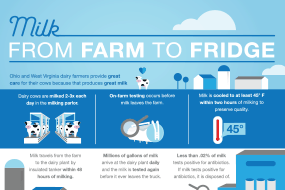
Milk: From Farm to Fridge
Discover how milk gets from the farm to your fridge and all the amazing steps in between.
How is Lactose-Free Milk Made?
Lactose-free milk is real cow’s milk, so it starts the same way as regular milk. Lactose is a natural sugar found in milk that can be difficult for some people to digest if their body does not naturally produce enough lactase, an enzyme that breaks down lactose in the body. Lactose-free milk contains the same 13 essential nutrients as regular milk and is a nutritious and wholesome way for people with lactose intolerance to enjoy real dairy.
Milk becomes lactose-free using one of these two methods:
- The addition of lactase to break down lactose.
- A filtration process is used to remove the lactose entirely.