Bone Health
Strong bones are built throughout life, and nutrition plays an important role at every stage.
Dairy foods like milk, cheese and yogurt are some of the best foods for bone health. They naturally provide calcium, high-quality protein, vitamin D, phosphorus, potassium and magnesium that work together to build and maintain strong bones throughout life.
These nutrients are difficult to replicate in a single food, which is why dairy plays a unique role in supporting bone development, bone strength and long-term skeletal health.
Why Bone Health Matters
Bones are living tissues that are constantly changing. During childhood and adolescence, the body builds bone rapidly. Peak bone mass — the greatest amount of bone a person develops — is typically reached by the late 20s.
After peak bone mass is achieved, the focus shifts to maintaining bone strength and slowing natural bone loss over time. Supporting bone health throughout life may help reduce the risk of osteoporosis and fractures later in life.
Key nutrients associated with healthy bones include: Calcium, Vitamin D, Protein, Phosphorus, Potassium and Magnesium.
Dairy foods provide several of these nutrients in one package, making them a practical and nutrient-dense option for supporting bone health.

How Dairy Foods Support Bone Health
Unlike single-nutrient supplements or isolated foods, dairy provides a naturally integrated nutrient package that supports bone health in multiple ways at once.
Calcium
Calcium is the primary mineral found in bones and teeth. Adequate calcium intake is vital to building and maintaining bone density.
Vitamin D
Vitamin D helps the body absorb calcium and supports normal bone mineralization.
Protein
Protein provides the structural framework for bones and helps support both bone and muscle health.
Phosphorus, Potassium & Magnesium
These nutrients contribute to bone formation, bone maintenance and overall skeletal function.
This combination makes dairy one of the most efficient dietary strategies for supporting bone health across the lifespan.
Building Strong Bones Early in Life
Childhood and adolescence are critical times for bone development. During these stages, the body actively builds bone density and strength that help support long-term health.
Getting enough key nutrients during this time helps:
- Build strong bones and teeth
- Support overall growth and development in childhood
- Establish a foundation for lifelong bone health
Dairy foods such as milk, cheese and yogurt provide high-quality protein, calcium, vitamin D, phosphorus, potassium and magnesium that work together to support growing bones. Research shows that eating adequate amounts of dairy every day helps ensure that children and adolescents achieve peak bone mass, which is associated with reduced risk for osteoporosis later in life.
A helpful way to think about bone development is as a “bone bank.” The more bone mass built during youth, the greater the reserve available later in life as natural bone loss occurs with aging.
Achieving Peak Bone Mass
Peak bone mass is typically achieved between ages 25 and 30. Maximizing bone strength during childhood, adolescence and early adulthood is one of the most important steps for supporting lifelong bone health.
Nutrition continues to play an important role during these years.
Dairy foods provide essential nutrients that contribute to bone structure and maintenance, including:
- Calcium and vitamin D to support bone structure and strength
- Protein to help build and maintain bone tissue
- Phosphorus, potassium and magnesium to support bone formation
Research suggests that achieving optimal peak bone density is linked to reduced risk of bone disease later in life.
Maintaining Bone Health in Adulthood
Bone health remains important throughout adulthood. Around age 30, the body gradually begins to lose bone faster than it builds new bone. During this time goals shift to maintaining bone strength and slowing natural bone loss over time.
Healthy lifestyle habits that support bone health include:
- Eating a balanced, nutrient-rich diet
- Consuming adequate calcium and vitamin D
- Participating in regular physical activity
- Avoiding smoking and limiting excessive alcohol intake
Dairy foods can help adults meet daily nutrient recommendations related to bone health. Research indicates that dairy consumption is associated with maintaining bone mineral density and is linked with a lower risk of fractures in adults.
Bone Health & Aging
As people age, bone loss can accelerate, increasing the risk of osteoporosis and fractures—especially in the hip, spine and wrist. Maintaining strong bones supports mobility, independence and overall quality of life in older adults.
Osteoporosis is a major public health concern affecting millions of adults, making nutrition and lifestyle strategies especially important in older populations.
Dairy foods can support bone health in older adults by helping provide:
- Calcium and vitamin D for bone maintenance
- High-quality protein to support muscle health
- Nutrients that contribute to overall dietary quality in an accessible way
Clinical research shows that consuming adequate dairy may help reduce the risk of falls and fractures in older adults, as demonstrated in studies linking dairy intake with lower fracture risk.
Bone Health Resources

Choose Dairy For Your Family
Dairy foods provide 13 essential nutrients, including protein, to nourish families.
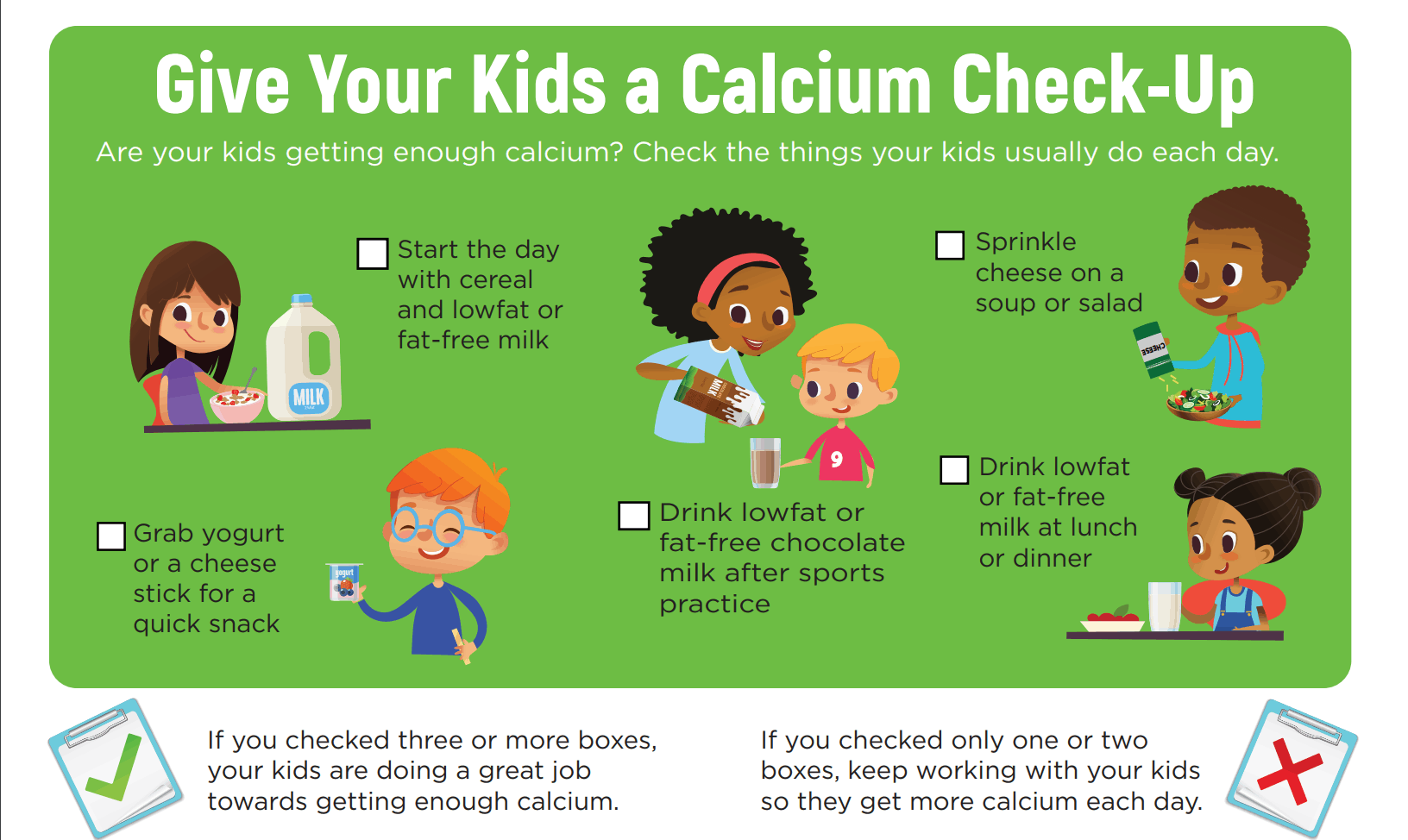
Strong Bones For Your Kids
Includes a calcium check-up, requirements by age and tips to help kids get the calcium they need.
13 Ways Milk Can Help Your Body
One serving of milk contains 13 essential nutrients your body needs.
9 Ways Yogurt Can Help Your Body
Discover the essential nutrients one serving of yogurt provides.
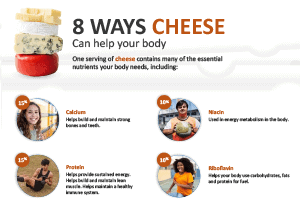
8 Ways Cheese Can Help Your Body
One serving of cheese contains essential nutrients your body needs.
Science Summary: Dairy & Bone Health
Dairy foods are integral dietary components for building and maintaining healthy bones.
Dairy Intake & Bone Health Across the Lifespan
Daily consumption of low-fat dairy foods across the lifespan plays a beneficial role in bone health.