The Schafer Family
Dairy farmers from Russia, Ohio
Ethan, Kyle and Brad Schafer, brothers and cousins, work together to care for about 200 milking cows and 1,000 acres of crops on their dairy farm in Shelby County. The trio also own and operate a milk hauling business servicing local area dairy farms.
What’s the history of your farm and how did you all get started?
Ethan: My brother Kyle, my cousin Brad and I own Schafer Dairy and run a milk hauling business. We’re the next generation to take over the family businesses. Our Grandpa started hauling milk in 1948 and bought the farm in 1950. In 1975, after my dad graduated school, they started milking cows. It’s important to us to carry on the family legacy.
I went to Ohio State ATI for Dairy Science and came back to the farm full-time. About a year later, my dad retired, and I took on the herd manager position.
Kyle: I’m the oldest of us all, and I take care of all the feeding every morning and fill in wherever needed. I went to college to play basketball and then came back to the farm. I really like the flexibility of the job and being my own boss. I grew up watching my dad and uncles farm, and I’ve worked here every summer, so I guess it’s in my blood. It felt natural to step into the responsibility of continuing what our family has built over all these years.
Brad: After high school, I joined the Army and spent a few years away. That time helped me realize how much I wanted to return to the farm. Taking over the farm at a young age was a big risk, but I believe if we hadn’t taken that opportunity, it would be lost for future generations—and I want my kids to have the same chance someday.
I work more on the crop side of things with planting, chopping and combining, but also help with scraping barns, milking and feeding calves. I also drive the milk truck and coordinate logistics with the milk hauling.

What are some things you do on your farm to keep your cows healthy and comfortable?
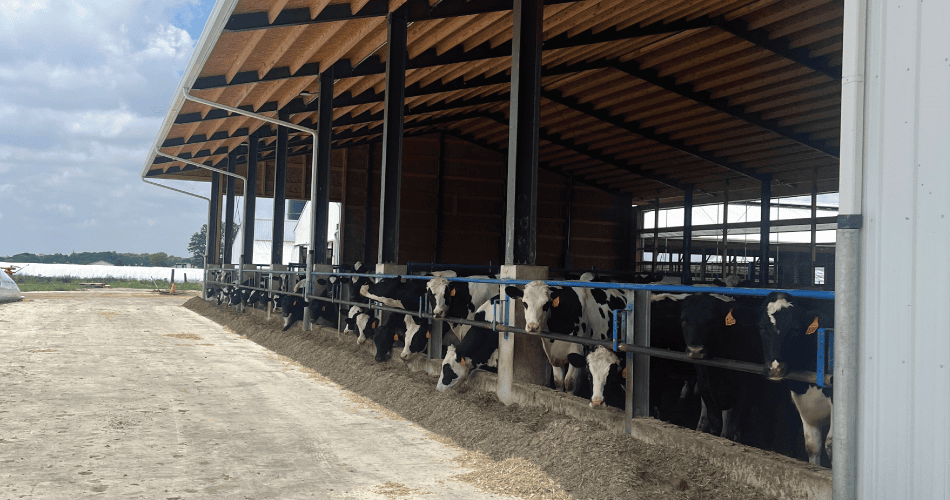
Ethan: Our calf barn and heifer-raising facility were both built in the last 10 years and consist of open housing and heated floors for the young calves. In the freestall barn, the milk cows stay comfortable on thick, memory foam mattresses and enjoy a fresh, buffet-style ration to eat as they please.
We also use an activity tracking system to monitor our cows’ health. An internal monitor collects data every five minutes and sends it to my phone – things like body temperature, movement and rumination that we can use to tell how she’s feeling. I can wake up in the morning and know what the cows are doing before I even walk out the door. It helps you prepare for the day and catch potential problems sooner.
How do you manage manure on your farm, and what practices do you use to protect the land for future generations?
Ethan: We’re enrolled in the H2Ohio program and have a manure management plan. We store manure all year so we can apply it to our fields when the timing is right. It depends on weather, field conditions and other factors so we can make sure the manure is absorbed into the soil and prevent the potential for runoff into waterways. We are always trying to learn and to do things better so we can keep improving.
Brad: Manure is essential—you can’t grow anything without it. We typically apply manure in the fall and spring as natural fertilizer to help us grow better crops. It goes on in the spring after cover crops come off and that helps grow sudan grass. In the fall, the manure goes on to fields where we harvested corn silage, which helps grow rye or triticale that we’ll use for forage.
We’re working to protect our land from the ground up. So we no-till all our crops, plant cover crops, plan crop rotations and of course, have a manure management plan. These are some things that have improved our soil health and productivity over time.
You are doing more than just dairy farming – tell us about it?
Brad: We haul milk for about 25 dairy farms from Findlay to Marysville and deliver it to local processing plants. We work with other small farms, like ourselves, and it’s given us a unique opportunity to learn from each other and see milk’s journey from all angles.
Kyle: We also raise all our own steers and operate a farm store. People can stop by during store hours to buy our home-raised beef, as well as pork, chicken and other seasonal items. We sometimes joke that with the farm, milk hauling and storefront we’re the ultimate farm to table grocery store.

Meet more Ohio and West Virginia dairy farmers.